Loading...

Kinnaur & Spiti Valley Tour

9 Days & 8 Nights

Shimla - Sangla - Chitkul - Kalpa - Nako - Tabo - Kaza - Kunzum pass - Solang Valley - Manali

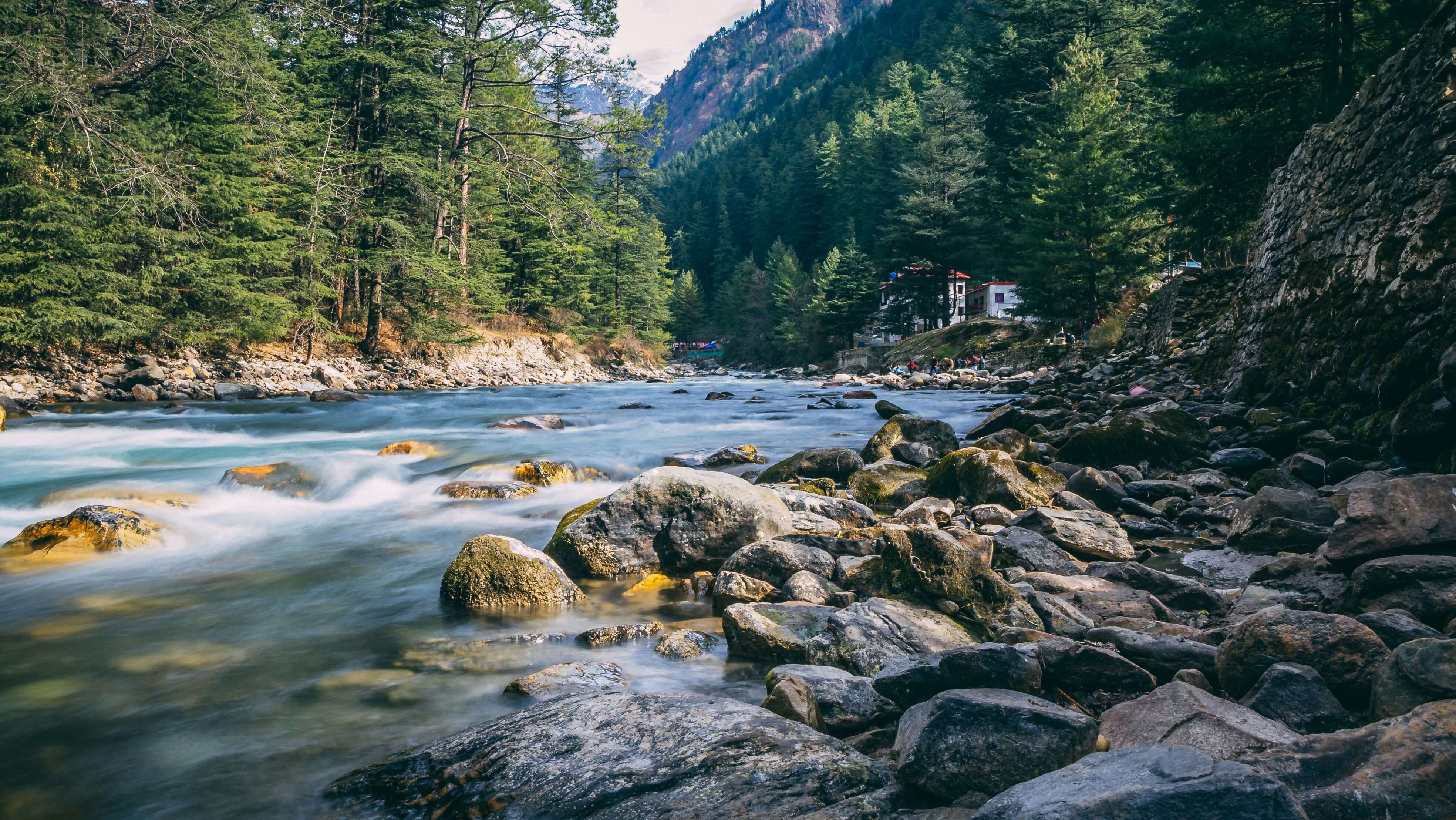
Experience the raw beauty of the Himalayas on a journey through Kinnaur and Spiti Valley, where rugged mountains, pristine rivers, and ancient monasteries create a landscape unlike anywhere else. Traverse the scenic Sutlej and Spiti rivers, explore traditional Himalayan villages, and witness the breathtaking Chandratal Lake, Key Monastery, and Tabo Monastery.
Day 01 : Chandigarh Arrival - Drive to Shimla

Arrive Chandigarh and drive to Shimla.

The British discovered Shimla in the form of a little village in 1819 during the Anglo-Gorkha war. When war broke afresh in 1819, the British took the place with its cool and healthy climate. Here was installed a village of tents, where the heat weary British military and civil officers came to rest and the first house built in 1822, is regarded to be “Kennedy House” which was the residence of Charles Pratt Kennedy, the newly appointed political officer to the hill states. In 1864 under the Viceroyalty of John Lawrence, Shimla was officially declared the Summer Capital of British Empire in India (April to October). - a status is retained upto Indian Independence in 1947. After the independence of India, Shimla became the capital of Punjab until 1966, when it came under Himachal Pradesh. In 1971 Himachal Pradesh became a full fledged state and Shimla became the capital of this state.

Day 02 : Shimla - Karchham- Sangla (2680m) / 240 Kms. / 9 Hrs drive

After breakfast, drive to Sangla (Kinnaur) through the Baspa Valley. Kinnaur is a border district, located in the southeastern part of the northern state of Himachal Pradesh. Kinnaur holds three of world's grandest mountain ranges-the Zanskar, the Greater Himalaya, and the Dhauladhar-and the famous 4,573-meter-high Kinner Kailash mountain by whose side is the seventy-nine foot vertical rock formation that resembles a Shivalinga and changes color as the day passes.

Karchham (1,899 m), located at the confluence of the Sutlej and Baspar rivers, is the start of the picturesque Baspar Valley of which Sangla is the largest settlement. Baspa Valley is the prettiest Valley in the Himalayas. The beautiful valley along Bhaba River is an important tourist spot. It is a link road to the valley, which originates at Wangtu. It has a reservoir lake and alpine meadows and is famous for the trek route to Pin Valley in Spiti. Sangla is 18 km from Karchham and is perched at a height of 2880 meters. A link road that goes off the National Highway into the Baspar valley offers an enchanting spot at every curve. There are saffron fields, orchards, and higher up, as the road climbs the steep, there are lush green alpine meadows.

Overnight at Hotel.

Day 03 : Sangla –Chitkul-Sangla- Kalpa (2960m) / 120 Kms. / 4 Hrs drive

Morning local sight seeing and afternoon drive to Kalpa

Chitkul (3450 mts.): Chitkul is the last and highest village in the enchanting Sangla valley, situated on the right bank of river Baspa at a distance of 26 km from Sangla. This is one of the most beautiful village in Himachal Pradesh. There are 3 temples of local goddess Mathi.

Sangla Village(2680 mts.) : village is situated on the right bank of Baspa River, the village of Sangla has the main market and the village houses are an unique examples of wooded architecture.

Kamru Fort(2800 mts.): Fort is situated at a distance of 1 km from Sangla, it is a five storeyed old fort. It serves as an excellent example of an architectural style that is unique to this part of the world. The fort belonged to the rulers of erstwhile Bushehar.    

Kalpa : There are about 77 villages in the Kinnaur district and Kalpa is one of the biggest of them, once a favorite haunt of Lord Dalhousie.  In front of Kalpa is an impressive view of the Raldang Kailash massif directly across the Sutlej river. There are almost no urban centers. Rechong Peo is the headquarters of the Kinnaur district. It is placed at an altitude of 2670 meters, and offers a fine view of the Kinner Kailash. At a distance of 3 km from Rechong Peo, Kothi has a temple dedicated to the Goddess.

Evening village visit and then stay overnight at Hotel.

Day 04 : Kalpa - Nako - Tabo( 3050m) / 140 Kms. / 06-07 Hrs drive

After breakfast, drive to Nako, Nako  is surrounded by willow and polar trees. There is a small village on the bank of this lake - and the village seems to be half buried by the lake's borders. On the water's northern side, are four Buddhist temples with stucco images and murals. Near Nako is a footprint-like impression ascribed to the saint Padmasambhava. It freezes in winter and people enjoy skating on this lake.Nako Lake is a pilgrim destination for the Buddhists. Because the Nako Lake is situated at such a great height, there are only a few species of fishes that populate the lake. Anglers coming here with their fishing rods come mainly to while away their time in the beautiful surroundings of the lake. One can observe numerous species of birds and flying overhead at Nako Lake. A perfect place for nature lovers & ornithologists alike, Nako Lake and Nako Monastery is a popular tourist destination in Himachal. Enjoy the atmosphere & obtain blessings as Nako in Kinnaur invites everyone with a welcome smile.

After lunch drive further to Tabo

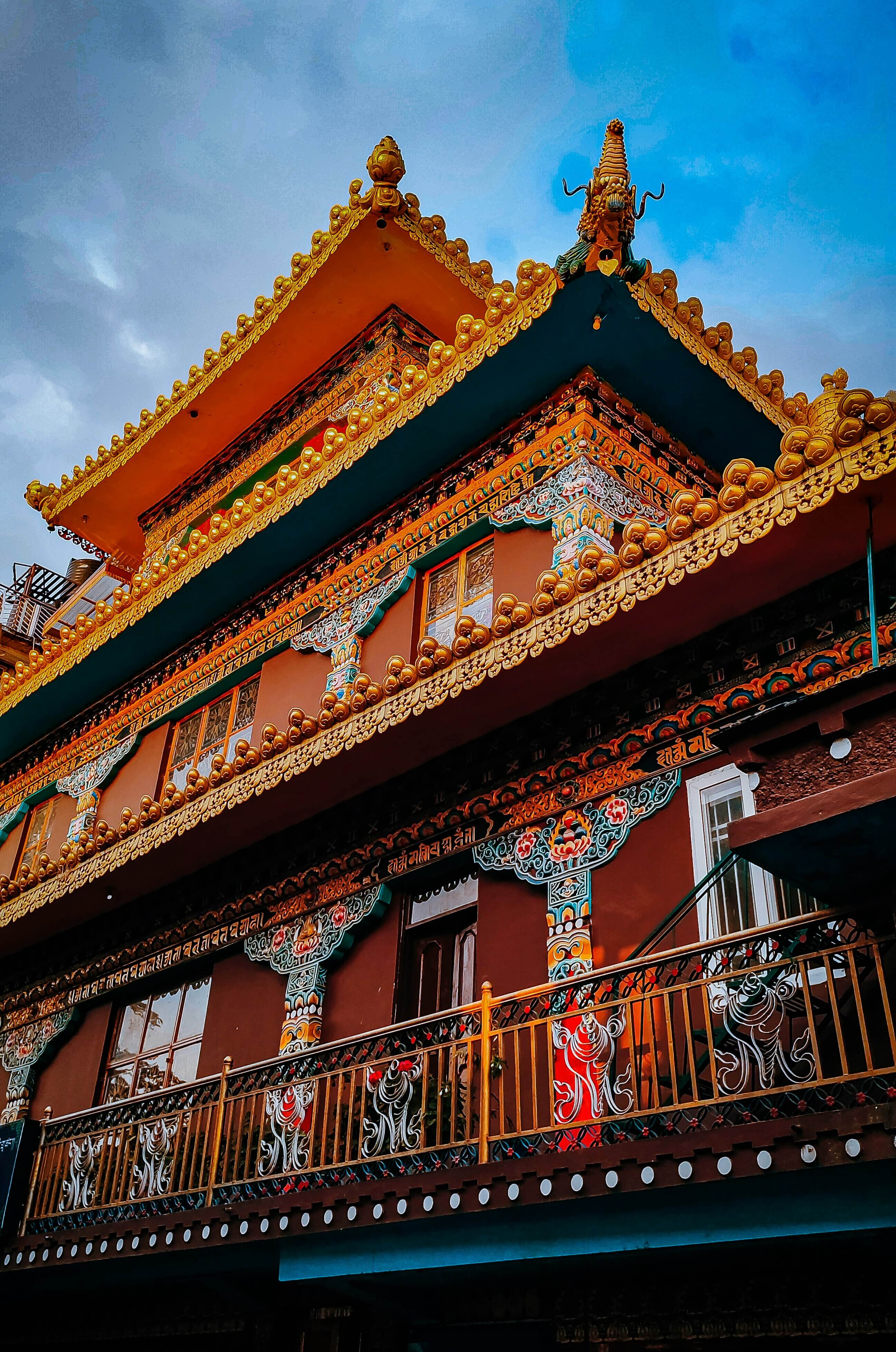
Tabo the largest district in the northern state of Himachal Pradesh, Lahaul and Spiti, is a vast area of high mountains and low valleys. It is bounded by Ladakh to the north, Tibet to the east, and the Kullu valley to the south. The district is named after its two subdivisions, which are distinct and separate regions, despite of their topographical and cultural similarities. The altitude varies from over 6,500 m in the high peaks to 2,740 m, where the Chenab River makes its exit from the region. The Lahaul region is at an altitude of 3000-3900 m, the air is much rarified and there are heavy snowstorms between September and May. Nevertheless, since the rains here are very scanty, it is an ideal place for trekkers, especially in the months between June and September. The Spiti valley is connected to Lahaul through the 4500-m Kunzam pass. Beyond the reach of the monsoon, the valley sees little rain in summer, when the sun is strong, and the nights cool. It is the seat one of the most famous Buddhist monasteries regarded next to the Tholong Gompa in Tibet. The monastery contains large number of scriptures and pieces of art, wall painting and Stucco. It is also know as Ajanta of Himalayas

Tabo Monastery: It is situated at village Tabo at a height of 3050m lying in the Spiti valley near the Tibetan (Chinese) border just north of the Satluj River. The Tabo Gompa is the largest monastery complex of Buddhist religion.

This has been declared as a protected monument. It was built in A.D. 996 by Ringchen Zangpo and has been declared as the place where the current Dalai Lama will retire. Its sculptures, stucco images and wall paintings are similar to the Ajanta-Ellora paintings.

Stay overnight at hotel.
Day 05 : Tabo (3050m) – Kaza(3600 mts.) 90 Kms. / 4 Hrs drive

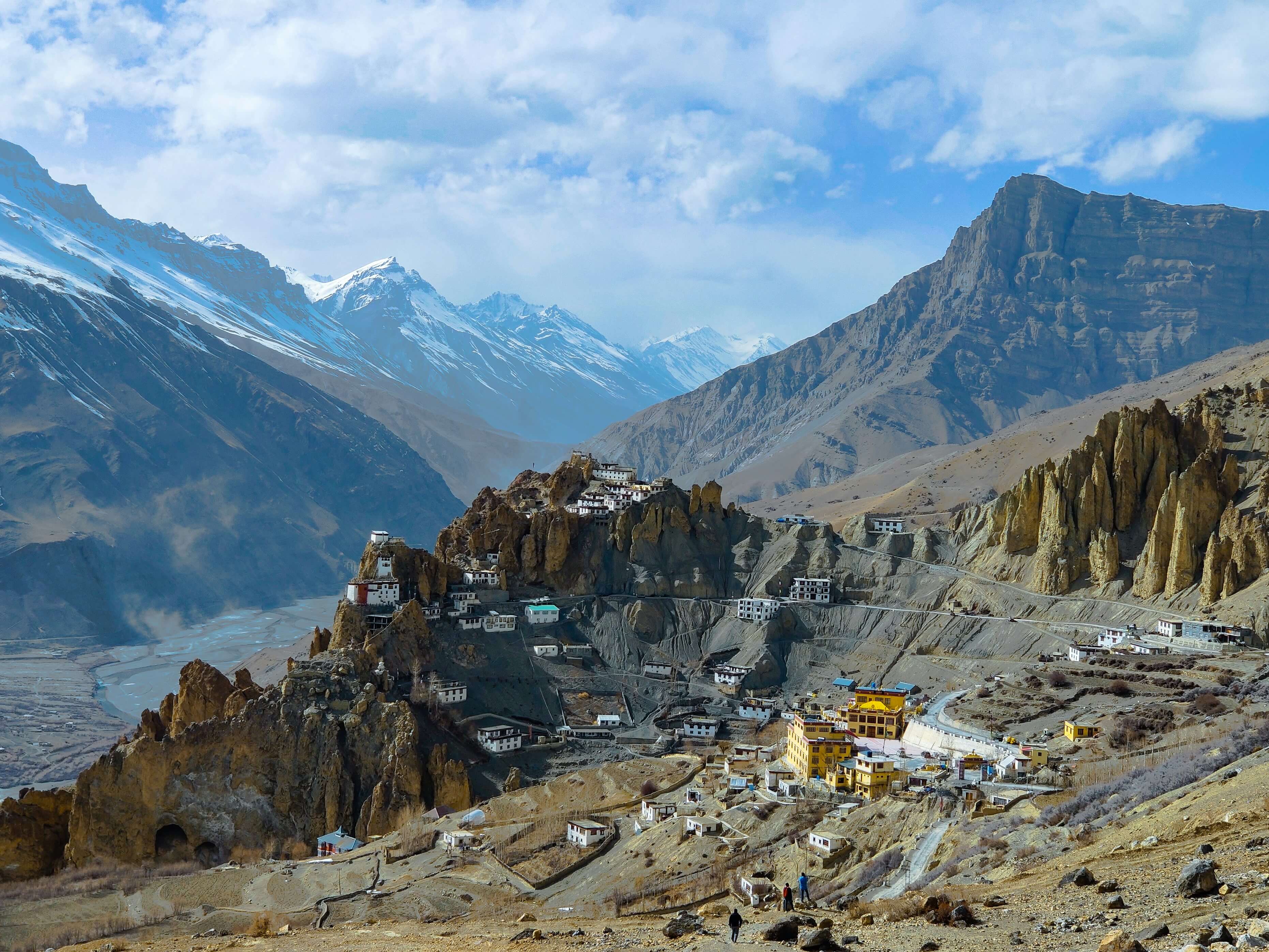
After breakfast, drive to Kaza . Enroute visit Dhankar Monastery

Dhankar Monastery: Dhankar is located on top of a hill  about 25 kms. east of Kaza and 7 Km from Schichling National Highway in local parlance, a ‘dhankar’ is a fort. This was once the castle of the rular Spiti, the Nano.  On top of a hill there is a fort which uses to be the prison in olden times. Today it has about 150 lamas in residence, a collection of Buddhist scriptures, a 4 bodied  " Vairochana" (Dhayan Budha) , murals of Medicine Buddhas and protector deities.

Kaza is the sub-divisional headquarters of Spiti, situated on the left bank of river Spti on National Highway. This is the main market in the Spiti valley. It has all modern facilities and is connected by road with Manali & Shimla except in the winter months.

Overnight at Hotel.

Day 06 : Kaza local sightseeing

Local Tour visitng Ki , Kibber and Kaza Market

Ki Monastery: Situated in Spiti about 11 kms from Kaza was founded by Dromton (1008-64 A.D), the founder of the Ge-lug-pa sect in the 11th century. On the left bank of the Spiti River the Ki Gompa (4116) is regarded as the largest and the oldest monastery in the sub-division.  Thousands of devotees from all over the world here attended the Kalachakra ceremony which was performed in August, 2000 by His Holiness Dalai Lama.

Kibber : Kibber is 11 km from Ki Gompa, and is the highest settlement in the world (4205 meters) with a motorable road and electricity. The Ladarcha festival held here each July attracts Buddhists from all over the world. The Pin Valley, south of the Dhankar gompa, has been declared as a national park, where one might see the snow leopard.

Overnight at Hotel.

Day 07 : Kaza- Kunzum Pass(4551 m) – Atal Tunnel-Solang Valley- Manali (201Kms. / 08 Hrs drive

After breakfast, drive to Manali, over the Kunzum and Atal Tunnel.


Atal Tunnel : Today we drive to the new tourist hotspot Atal Tunnel– world's longest tunnel at an altitude of 10,040 feet. and is located amidst snow-capped mountain peaks and a beautiful valley . As you pass by the 9.02 KM long tunnel which takes around 9 minutes. The North Portal of Atal tunnel opens in the town of Sissu, in Lahaul Valley — a completely different part of Himachal Pradesh than Manali, or Kullu Valley. you will see entirely different world with barren landscapes with almost no trees and greenery but even higher mountain peaks covered with snow and Chandra, a tributary of Chenab river, flowing next to the tunnel. Atal Tunnel is equipped with emergency escape tunnel that runs underneath the main highway, fire hydrants and emergency telephone facility at regular intervals. CCTV cameras and automatic incident detection system, pollution sensing device, automatic ventilation system and the tunnel is equipped by 4G BSNL broadband system. This is the only tunnel of the country where people will not lose mobile signals and can even enjoy high-speed internet.


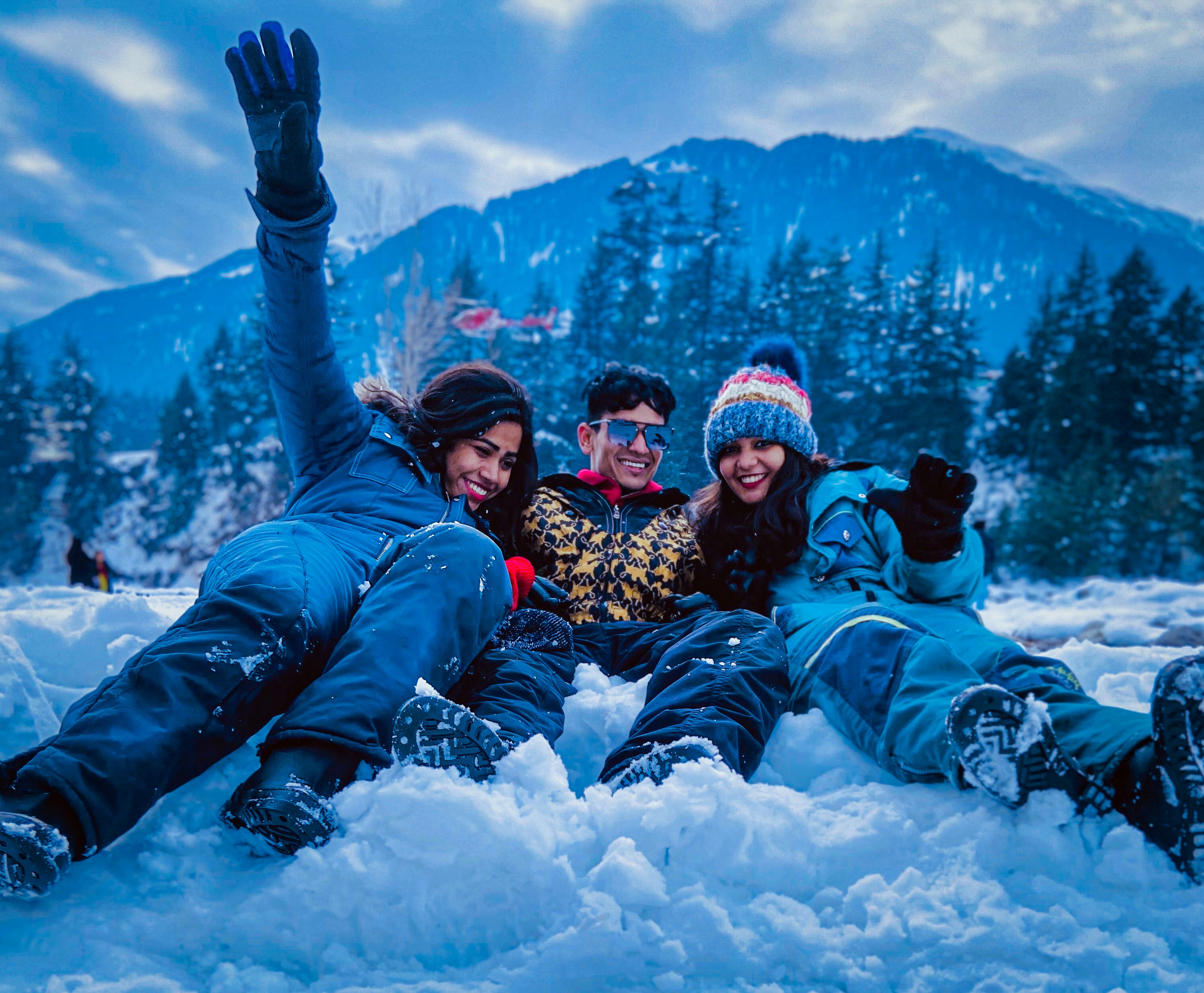
Solong Valley (2480 mts.): Solong valley is 13 km from Manali. This is a splendid valley between Manali and Kothi and offers the view of glaciers and snow capped mountains. There are good skiing slopes equipped with an excellent lift. The winter skiing festival is held here every year.

The adventure activities like paragliding, snowboarding & zorbing, camping, and the gondola or the Solang Ropeway can be done( on direct payment basis).

Manali, one of India’s most famous hill stations, derives its name from Manu and Alaya, who came here for the renewal of the life after battling a deluge for forty days and nights. Manali (2050 mts.) is situated left bank of river Beas on the National Highway to Leh. This is the main town in the Kullu valley which is famous for its apples. Manali is also famous for adventure sports like trekking, mountaineering, paragliding skiing, hiking, mountain biking and rafting etc.

Stay overnight at hotel. 

Day 08 : Manali sight seeing tour

Hadimba Temple/Doongri Temple: The temple is dedicated to the local deity Hadimba built in 1553 AD, and having four-tiered pagoda shaped roof and a front doorway carved with figures and symbols. Legend has it that the ruler who built this temple did not wish its carving to replicated, so he had the right hand of the artiest. It is believed that here Bhim, the great Pandava of the Mahabharata Epic killed the strong and cruel demon, Hadimb and married his sister Hadimba. Hadimba expurgated her all sins by performing a great Tapa, and consequently began to be worshipped as a goddess.  A major festival is held here in the month of May.

Vashisth Hot Water Sulphur Spring:  This is 3 km away from Manali and known for its pyramidal temple dedicated to Vashishta Muni, and natural hot water sulphur springs with two separate bathing tanks for gents and ladies.

Old Manali/Manu Temple: This is an original settlement with few old houses made of wood having slate roofs. There is also the Manu Maharishi Temple, dedicated to Manu, who was the creator of human race on the earth.

Club House : Club House is an amazing amusement and adventure zone, it has various indoor and outdoor game facilities. The Club house is managed by the Himachal Pradesh Tourism Development Corporation (HPTDC). Visitors can enjoy games like carom, skating, go-karting billiards, and table tennis.

also zip-lining where one has to cross a river using ropeway. There is an in-house restaurant at the Club House complex where the guests can enjoy hot and cold beverages, along with some delightful snacks. Other additions are video games centre, an auditorium and a library.

Overnight at Hotel.

Day 09 : Manali - Chandigarh - Tour Ends

Drive to Chandigarh and board your flight/ train to next destination. THE TOUR ENDS

Inclusion Exclusion
  • Accommodation in nice hotels
  • All 08 breakfasts and 08 Dinners
  • All ground transportation by AC (Non-AC in hills) Innova Crysta or Mahindra Scorpio Car as required in the tour programme
  • All Toll taxes, parking fee, state taxes and drivers allowances


  • Airfare/Train fare/Bus fare
  • Any other meals
  • Any expenditure of personal nature such as telephone calls, laundry, mini bar or drinks during meals, tips to driver, guide, helper, etc.
  • Any kind of Insurance and medical evacuation
  • Any Hotel before starts and after tour ends
  • Guides and Monuments Fees

Let’s Plan Your Journey